
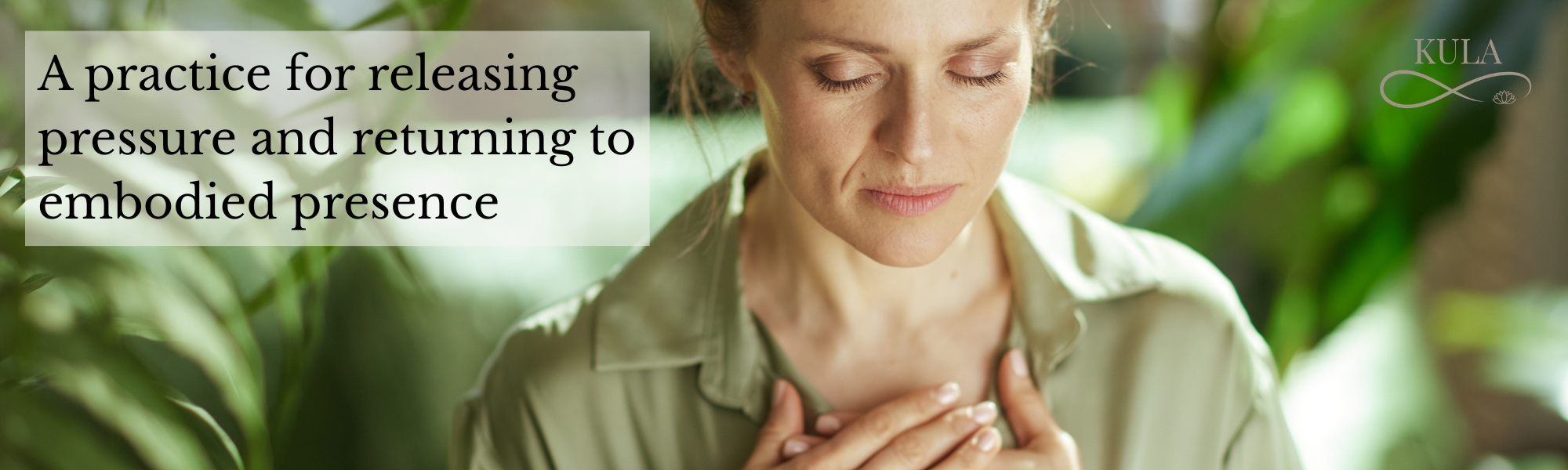
Presence Over Performance
(2:32)
This guided practice supports a shift from performance-based effort toward grounded presence.
Rather than trying to do something well, improve a state, or achieve an outcome, the practice invites you to soften effort and reconnect with the experience of simply being here.
It is especially helpful when pressure, self-monitoring, or the need to “get it right” has created internal tension.
Why This Practice Works
Presence Over Performance is informed by research in stress physiology, attention regulation, and trauma-informed practice.
When performance pressure is present, attention often becomes self-referential and effortful, increasing nervous system activation.
This practice supports:
- releasing effort and internal evaluation
• reducing self-monitoring and comparison
• allowing attention to rest in present-moment experience
• restoring safety through non-striving
Key understanding: Presence emerges when effort softens.
Purpose of This Practice
When performance becomes the dominant internal mode, attention often narrows, the body tightens, and experience becomes something to manage rather than inhabit.
This practice is intended to:
-
soften internal striving
-
reduce self-monitoring and internal pressure
-
restore contact with direct experience
-
support a sense of being rather than doing
The goal is not disengagement from life or responsibility, but a return to presence as the ground from which action can arise more naturally.
What This Practice Supports
-
release of performance-based tension
-
reduced internal comparison or self-evaluation
-
embodied awareness and sensory contact
-
steadier, less effortful participation
This practice does not aim to improve performance.
It supports presence as a sufficient state in itself.
Partial engagement is sufficient.
Completion is not required.
When to Use This Practice
when feeling pressure to perform or “be better”
• before presentations, conversations, or creative work
• after self-criticism or comparison
• during transitions from work into rest
• as a reminder that nothing needs to be fixed
How to Engage
Find a position that allows your body to settle without effort — seated, standing, or lying down.
Follow the guidance gently, without trying to “do it correctly.”
If attention drifts into evaluation or effort, return to the simplest instruction offered.
There is no expectation to stay with the entire practice.
Safety Note
If this practice brings up discomfort, self-judgment, or distress, pause and orient to your immediate physical environment.
Practices are optional and self-directed.
Seek qualified professional support if distress persists or intensifies.
Kula Paradise Academy provides educational and developmental programs.
This practice is not therapy, counseling, medical treatment, or crisis intervention.