
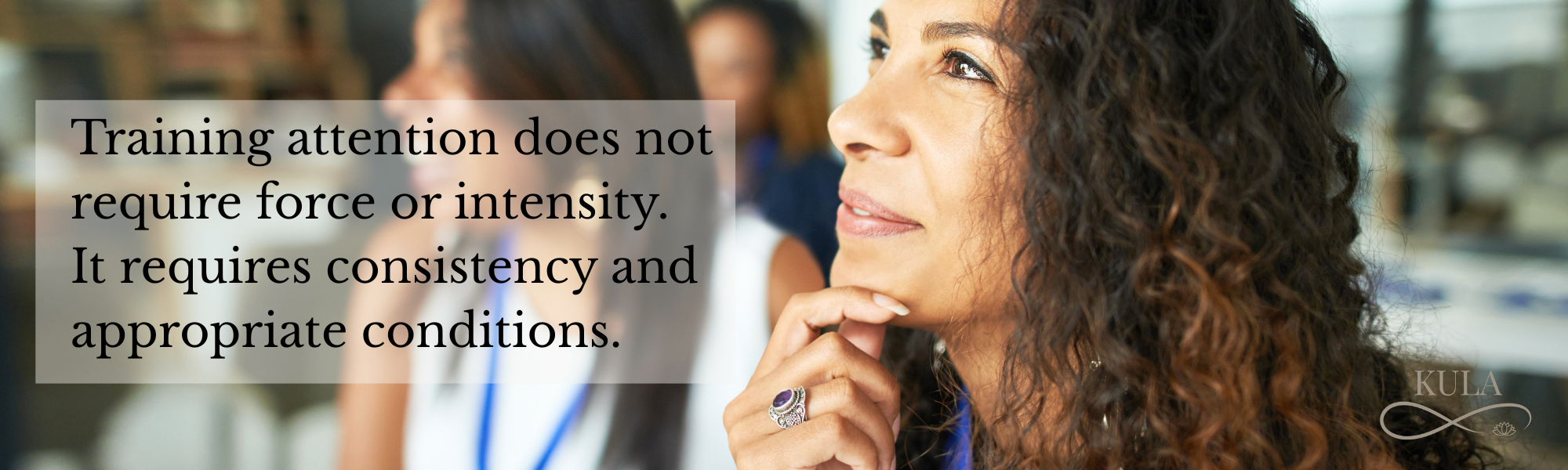
Attention Is Trainable
Attention is often treated as a fixed trait, something you either have or don’t.
Research across cognitive science and learning theory suggests otherwise: attention is a capacity that can be developed through practice, much like physical coordination or endurance.
What Attention Actually Is
Attention refers to the ability to:
-
place focus intentionally
-
sustain it for a period of time
-
notice when it drifts
-
return without excessive effort
This cycle; focus, drift, return is the core mechanism of attention training. Losing focus is not failure.
Noticing and returning is the practice.
Why Attention Degrades Under Stress
Under stress, physiological activation increases and cognitive resources narrow.
In this state:
-
attention becomes reactive
-
mental scanning increases
-
focus is pulled toward threat or urgency
Trying to force attention under these conditions often increases fatigue rather than clarity. This is why attention training works best when paired with regulation.
A Simple Model of Attention Training
A practical way to understand attention training includes four elements:
1. A stable reference point
A simple focal point such as breath, sound, or bodily sensation.
2. Gentle placement of attention
Attention is directed without strain.
3. Recognition of drift
Distraction is noticed without judgment.
4. Return
Attention is brought back repeatedly.
This cycle builds capacity over time.
What Trained Attention Supports
As attention capacity improves, people often notice:
-
improved clarity
-
reduced mental noise
-
greater emotional awareness
-
increased flexibility under pressure
These effects tend to accumulate gradually rather than appear suddenly.
Why Short Practices Work
Research-informed learning models suggest that short, repeatable practices are more effective for attention training than long or infrequent sessions.
Consistency supports neural adaptation. Intensity is not required.
Attention in Daily Life
Trained attention shows up as:
-
noticing reactivity sooner
-
staying present during conversations
-
returning to task after interruption
-
responding more deliberately
These are functional outcomes, not performance metrics.
Educational Scope
KULA Academy provides educational and developmental programs.
This article is intended to support understanding and reflection.
It does not offer therapy, counseling, or medical guidance.