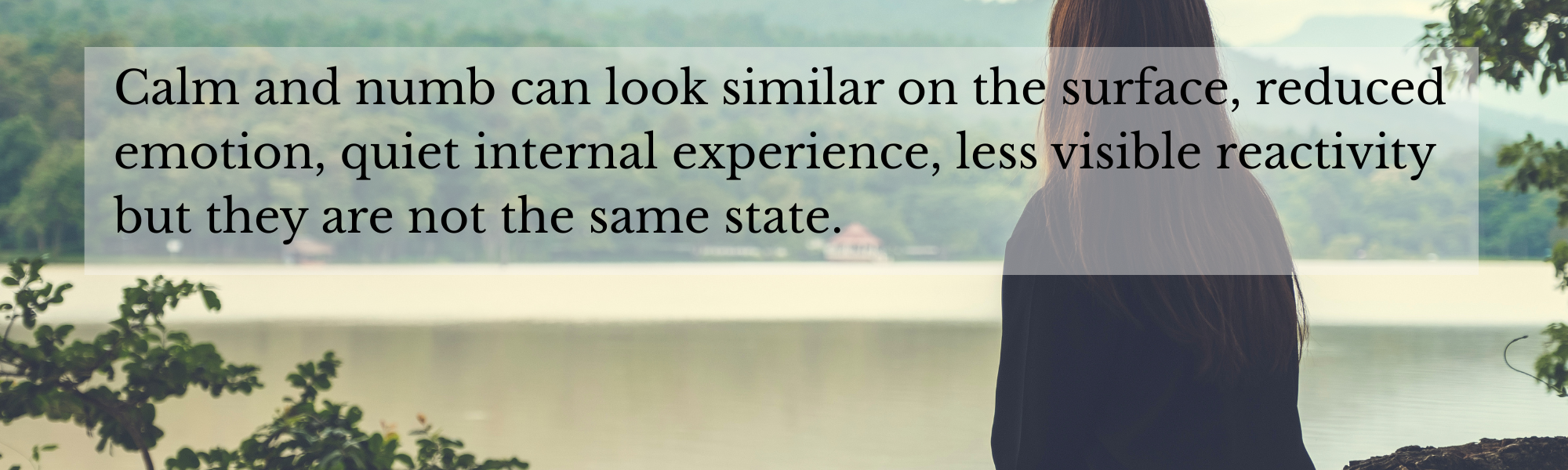
Understanding the difference matters because one supports engagement and choice, while the other limits perception and responsiveness.
Why the Distinction Matters
Many people seek calm as a way to reduce stress or overwhelm.
However, under certain conditions, reduced sensation or emotion may reflect numbing rather than regulation.
Without clear language, these states are easily confused.
What Calm Tends to Feel Like
Calm is generally associated with:
-
steadier breathing
-
relaxed but alert attention
-
emotional availability
-
the ability to respond when needed
In calm states, people often report feeling:
-
present
-
grounded
-
capable of engagement
Calm supports flexibility rather than withdrawal.
What Numbness Tends to Feel Like
Numbness is often characterized by:
-
reduced emotional range
-
diminished bodily sensation
-
detachment or distance
-
low responsiveness
Rather than steadiness, numbness reflects disconnection from internal signals.
This state can occur when the nervous system reduces input as a way to manage overload.
Why Numbness Can Appear Helpful
Numbness can temporarily reduce distress.
Because discomfort is muted, it may be mistaken for calm.
However, numbness also reduces access to:
-
emotional information
-
motivation
-
relational connection
-
internal cues
Over time, this can limit adaptability and choice.
Regulation vs. Suppression
From a regulation perspective:
-
calm reflects a settled but responsive system
-
numbness reflects reduced engagement
Regulation supports awareness.
Suppression limits it.
The difference is not moral or personal it is functional.
How Regulation Supports Calm
Research-informed regulation practices aim to:
-
reduce excessive activation
-
maintain access to sensation and awareness
-
support recovery without shutting down
This allows calm to coexist with responsiveness.
Practical Reflection
A useful question is not “Do I feel calm?”
but rather:
“Can I feel, notice, and respond if needed?”
If the answer is yes, calm is likely present.
If access feels limited, numbness may be at play.
Educational Scope
KULA Academy provides educational and developmental programs.
This article is intended to support understanding and reflection.
It does not offer therapy, counseling, or medical guidance.