
Breath as Anchor
A simple breath-led practice to restore coherence and presence
(2:46)
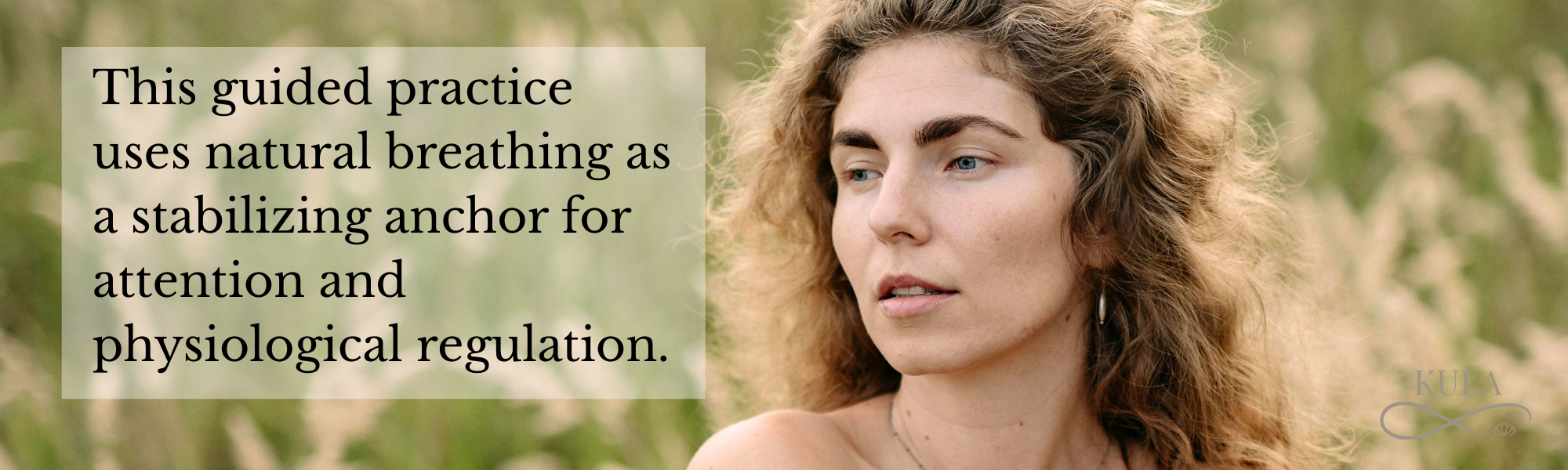
Rather than controlling the breath or trying to change your state, the practice supports awareness of breath as it is, allowing steadiness, presence, and coherence to re-emerge organically.
It is especially helpful when the mind feels busy, scattered, or untethered.
Why This Practice Works
Breath as Anchor is informed by research across neuroscience, psychophysiology, and attentional regulation.
The breath is one of the most accessible regulatory signals in the nervous system. When attention rests gently on natural breathing, without control or effort, it supports a shift out of heightened activation and into steadier regulation.
This practice emphasizes:
- awareness of natural breath rhythm
- gentle attention without concentration
- allowing rather than directing the breath
- using sensation as an anchor, not a task
Key understanding: Breath regulates best when it is observed, not managed.
Purpose of This Practice
Under stress or emotional demand, breathing patterns often become irregular or shallow, which can contribute to increased physiological activation and mental reactivity.
This practice is designed to:
-
introduce gentle rhythm to the breath
-
support coordination between breath and attention
-
create conditions for steadier internal alignment
The intention is not to control the breath, but to allow pacing to support regulation.
What This Practice Supports
-
stabilizing attention through rhythmic breathing
-
reducing internal reactivity
-
supporting autonomic balance
-
creating conditions for coherence
Effects are often subtle and cumulative. Consistency matters more than depth or intensity.

When to Use This Practice
when feeling distracted or unfocused:
• during moments of internal noise or restlessness
• between tasks or transitions
• before conversations or decisions
• as a short grounding practice during the day
How to Engage
Find a comfortable seated or upright position. Allow the body to be supported.
Bring gentle attention to the breath as it moves in and out. Follow the pacing offered in the guidance without forcing depth or speed.
If attention drifts, simply return to the rhythm of breathing.
Research Context (Educational)
Research in psychophysiology suggests that coordinated breathing patterns can influence autonomic activity and support steadier emotional and attentional states.
Coherence-focused models explore how synchronized physiological rhythms are associated with improved self-regulation and internal stability.
KULA Academy references this research to support educational understanding of regulation and coherence, without making medical or performance claims.
Safety Note
If this practice brings up discomfort or feels overwhelming, stop and return attention to your surroundings.
Practices are optional and self-directed. Seek qualified professional support if distress persists.
KULA Academy provides educational and developmental programs.
This practice is not therapy, counseling, medical treatment, or crisis intervention.