
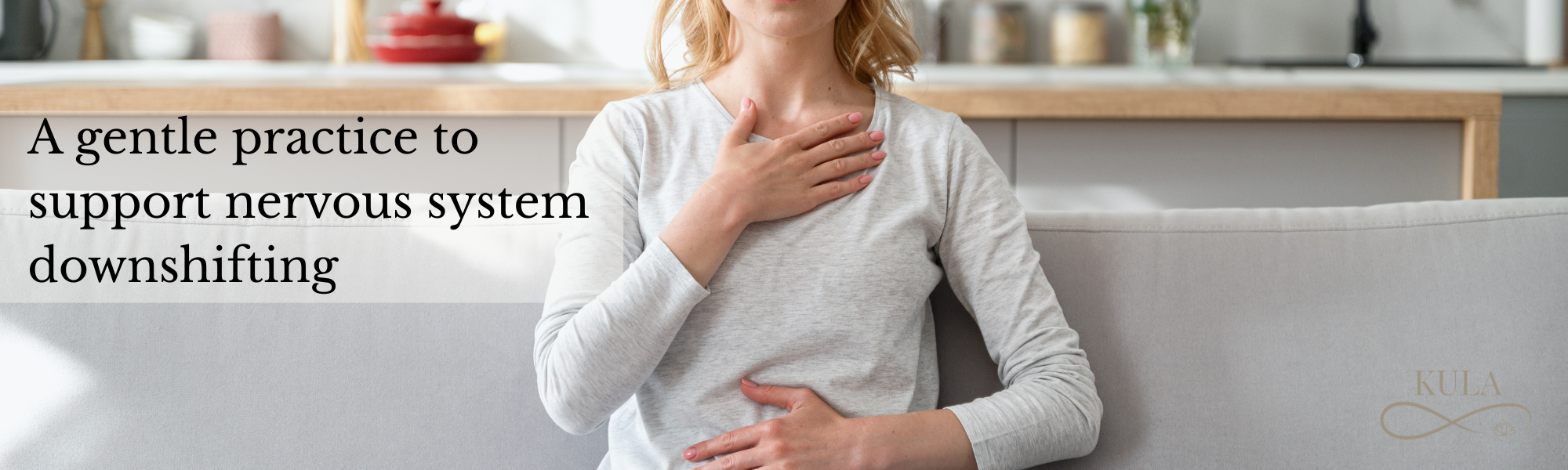
De-escalation for Overwhelm
(2:44)
This guided practice supports the nervous system when overwhelm, emotional intensity, or internal pressure feels high.
Rather than pushing through, calming down, or resolving what’s happening, the practice focuses on de-escalation, allowing activation to soften gradually and safely.
It is especially helpful when stress feels cumulative, emotions feel close to the surface, or the system feels overloaded.
Why This Practice Works
De-escalation for Overwhelm is informed by research in stress physiology, trauma-informed care, and autonomic nervous system regulation.
When overwhelm is present, the nervous system is often in a heightened state of activation. Attempting to reason, suppress emotion, or force calm can increase dysregulation.
This practice supports:
- reducing nervous system intensity rather than eliminating emotion
- allowing activation to decrease incrementally
- using safety cues and sensory orientation
- pacing that respects the body’s threshold
Key understanding: De-escalation happens gradually, safety comes before calm.
Purpose of This Practice
When overwhelm is present, the nervous system is often operating at a high level of activation, making reflection and decision-making difficult.
This practice is intended to:
-
reduce physiological intensity
-
slow internal pace
-
create a sense of containment and support
-
allow attention to widen again
The goal is not to solve what feels overwhelming, but to reduce escalation.
What This Practice Supports
-
lowering acute stress activation
-
restoring a sense of internal safety
-
reducing urgency and mental overload
-
supporting a return to baseline functioning
Even partial engagement can be helpful.
Completion is not required.
When to Use This Practice
-
during moments of emotional or mental overwhelm
-
when stress feels difficult to manage
-
after prolonged pressure or stimulation
-
before attempting problem-solving or decision-making
How to Engage
Find a comfortable seated or upright position.
Allow the body to be supported.
Follow the guidance at a gentle pace.
There is no need to go deeper than feels comfortable.
If attention drifts or intensity rises, you may pause or return attention to your surroundings at any time.
Safety Note
If this practice increases distress or feels destabilizing, stop and bring attention to your immediate surroundings.
Practices are optional and self-directed.
Seek qualified professional support if distress persists or intensifies.
KULA Academy provides educational and developmental programs.
This practice is not therapy, counseling, medical treatment, or crisis intervention.